The Enduring Icon: My Deep Dive into the Volkswagen Bus Phenomenon
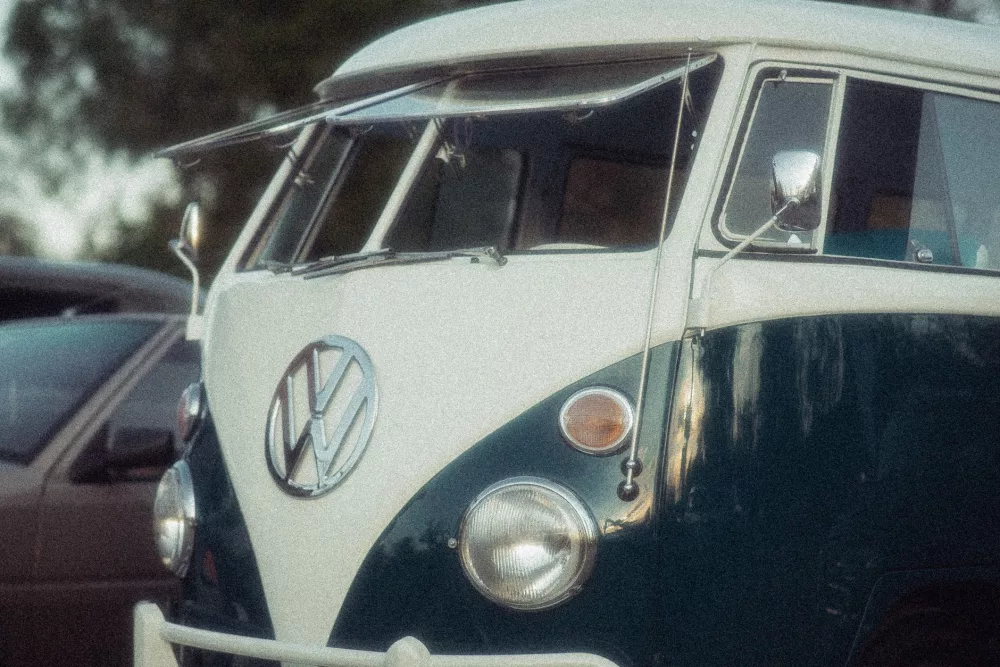
You know, there are just some vehicles that transcend their original purpose, becoming something more than just transportation. They become cultural touchstones, symbols of an era, and even a way of life. For me, the Volkswagen Bus, or as it's affectionately known in many circles, the VW Microbus, Transporter, or Camper Van, is absolutely one of those vehicles. It's got this incredible, almost magnetic charm that pulls people in, regardless of their generation. I mean, who hasn't seen one rolling down the road and immediately felt a sense of nostalgia or adventure?
It’s truly fascinating to think about how this unassuming utility vehicle, born out of post-war necessity, morphed into a global icon. Its story is pretty amazing, if you ask me, spanning decades and countless personal journeys. We’re talking about a vehicle that’s been a workhorse for tradesmen, a family hauler, a surf wagon, a protest symbol, and a comfortable home on wheels for adventurers exploring dusty backroads. That's a pretty diverse resume, wouldn't you say?
The Humble Beginnings: The Type 2 (T1 Split Window)
Our story really kicks off in the aftermath of World War II, a time when Europe was rebuilding and needed practical, affordable transport. The brilliant mind behind the Beetle, Ferdinand Porsche, had already set the stage, but it was Dutch importer Ben Pon who, in 1947, sketched out a simple idea for a box-on-wheels built on the robust Beetle chassis. His vision was a vehicle that could carry cargo efficiently. Volkswagen picked up the idea, and by 1950, the first production Type 2 rolled off the line in Wolfsburg, Germany.
They called it the Transporter, and early models were pretty basic, boasting a rear-mounted air-cooled engine, just like the Beetle. You'd find a split windscreen (hence the 'Split Window' nickname) and a surprising amount of interior space. It was a marvel of engineering simplicity. Imagine, a vehicle that could carry more than its own weight, yet was easy to maintain. My goodness, people loved its versatility!
- Early models featured a 1.1-liter, 25-horsepower engine. Not exactly a speed demon, but incredibly reliable.
- It was available in various configurations: a panel van, a Kombi (a mix of cargo and passenger), and the famous Samba Bus with its 21 or 23 windows, which was like a rolling panoramic observation deck!
- These early T1s quickly became indispensable for businesses, delivering everything from bread to furniture.
It didn't take long for the T1 to catch on globally, especially in the United States, where its distinctive look and utilitarian charm found an eager audience. It wasn't just a vehicle; it was a blank canvas for customization and personal expression.
The Counterculture Icon: The T2 (Bay Window) Era
As the world moved into the 1960s, the Volkswagen Bus evolved, and its cultural significance skyrocketed. In 1967, VW introduced the T2 generation, often referred to as the 'Bay Window' due to its single, larger front windscreen. This update brought some much-needed improvements:
- A slightly larger body.
- An updated suspension for a smoother ride.
- More powerful engines (though still air-cooled and in the rear).
- Improved safety features, like a padded dashboard.
But the real story of the T2 isn't just about its technical specs; it’s about its inextricable link to the counterculture movement. The 60s and 70s were all about freedom, adventure, and questioning the status quo. What better vehicle to embody these ideals than a roomy, affordable, and easily customizable van that could take you anywhere? Hippies, surfers, musicians, and free spirits embraced it as their mobile home, their band bus, or their canvas for vibrant paint jobs.
I mean, you couldn't scroll through pictures of Woodstock or any major music festival from that era without seeing a fleet of these colorful vans. They really became a symbol of peace, love, and a wanderlust that still resonates today. It’s hard to imagine that period without the sight of a flower-power painted VW Bus, isn't it?
Into the Modern Age: The T3 (Vanagon/Transporter) and Beyond
The 1980s brought another significant evolution with the T3 generation, known as the 'Vanagon' in North America or 'Transporter' elsewhere. This model was a substantial redesign, offering a wider, heavier body, and more creature comforts. It was still rear-engined, though water-cooled options became available, offering more power and better heating. This was a step up in terms of safety and refinement, making it a more practical choice for families and long-distance travel. We saw innovations like power steering, air conditioning, and even four-wheel drive (the legendary Syncro models!).
Then came the T4 (Eurovan) in the 90s, which marked a really big shift: the engine moved to the front. This dramatically changed the driving dynamics and offered even more interior space. While some purists might miss the rear-engine charm, it brought the Transporter into the modern era of vans, making it more car-like to drive and more competitive in the market.
Even more recently, Volkswagen introduced the ID. Buzz, an all-electric reimagining of the iconic bus. It's a fantastic blend of retro styling and cutting-edge electric vehicle technology, showing that the spirit of the Bus is still very much alive and adapting for the future. I think it’s a brilliant move to bring that joy and utility into the electric age!
The Enduring Appeal and My Thoughts
So, why does the Volkswagen Bus continue to capture our hearts? I think it's a mix of things:
- Nostalgia: For many, it's a direct link to a simpler time, to road trips, camping adventures, and youthful freedom.
- Simplicity: Despite its evolution, the core idea of a spacious, versatile, and relatively straightforward vehicle remains.
- Community: There's a massive global community of VW Bus enthusiasts. People restore them, customize them, and gather for events. It's more than just a car club; it's a shared passion.
- Unmistakable Design: Its unique, friendly, and instantly recognizable silhouette stands out in a sea of modern, aerodynamic vehicles. It just makes you smile.
Honestly, I find myself drawn to its humble origins and its incredible journey through cultural history. It's not just sheet metal and an engine; it's a vessel for dreams, a canvas for self-expression, and a reliable companion for countless adventures. From its utilitarian birth in post-war Germany to its vibrant role in the counterculture movement and its modern electric reincarnation, the Volkswagen Bus has consistently proven its adaptability and enduring charm. It's truly a vehicle that tells a story, and I, for one, can't wait to see what its next chapter holds.
About Editorial Team
Senior columnist and culture critic specializing in architectural designs, emerging high-growth systems, and contemporary philosophies.
Contact Desk
Have an editorial inquiry or custom partnership idea? Reach our team directly.